
Sleep Awareness Week (March 8–14)
Better Sleep, Better Days
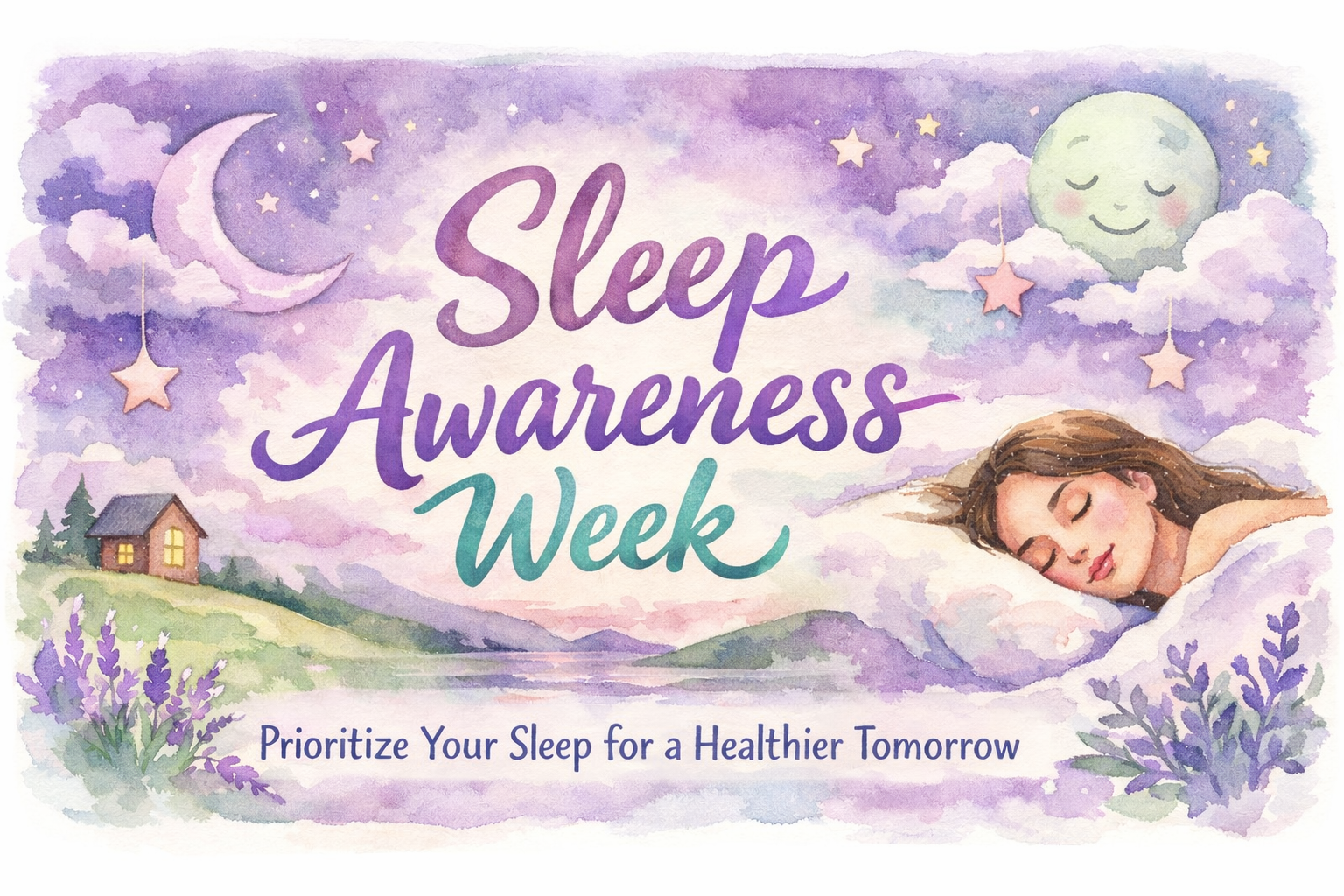
Each March, National Sleep Foundation spotlights how sleep impacts nearly every part of health during Sleep Awareness Week, held March 8–14, 2026.
This week is timed to the start of Daylight Saving Time—when many of us “spring forward” and lose an hour of sleep—making it the perfect moment to reset routines and protect rest.
Why sleep matters (beyond feeling tired)
Sleep isn’t just “down time.” It supports mood, attention, memory, immunity, metabolism, and heart health. When sleep is short or disrupted, it can show up as irritability, brain fog, low energy, cravings, or feeling run-down more often. That’s why sleep belongs in the same conversation as nutrition and physical activity.
A simple goal: consistent sleep, most nights
For many adults, the most powerful “sleep upgrade” is consistency—going to bed and waking up around the same time each day. The Centers for Disease Control and Prevention highlights that regular sleep/wake times, a calm sleep space, and limiting caffeine/alcohol close to bedtime can improve sleep quality.
Try the Sleep Awareness Week “Small Steps” Plan
Choose one or two of the ideas below—small steps tend to stick better than big overhauls.
1) Keep your schedule steady
Aim to wake up (and go to bed) at roughly the same time—even on weekends. This helps your body clock know when to feel sleepy and when to feel alert.
2) Build a 20–30 minute wind-down routine
Your brain needs a transition from “go” to “slow.” Try a warm shower, gentle stretching, calming music, or reading something light. If you’re on screens at night, consider powering down at least 30 minutes before bed.
3) Make your bedroom sleep-friendly
A space that’s quiet, relaxing, and cool can make it easier to fall and stay asleep. If needed, try blackout curtains, white noise, or a fan for comfort.
4) Watch the “sleep stealers” later in the day
Caffeine can linger for hours, so avoid it in the afternoon/evening if it disrupts your rest. Large meals and alcohol close to bedtime can also interfere with sleep quality.
5) Get light and movement during the day
Daytime activity and natural light help strengthen your body clock. Even a short walk outside can help reinforce a healthier sleep-wake rhythm.
Daylight Saving Time tip (March 8, 2026)
Because clocks jump forward on Sunday, March 8, 2026, many people feel a little “off” for a few days. To soften the impact, try shifting bedtime and wake time 15–20 minutes earlier for a few nights beforehand, and prioritize morning light and an earlier bedtime the night after the change.
When to get extra support
If you regularly:
- take more than ~30 minutes to fall asleep,
- wake frequently and can’t get back to sleep,
- snore loudly or gasp/choke at night,
- feel very sleepy during the day despite time in bed,
…it may be worth talking with a naturopath. Sleep problems are common—and many are treatable.
🌿🌿🌿🌿🌿🌿🌿🌿🌿🌿🌿🌿🌿🌿

